When to see the northern lights in Lofoten
Lofoten has skies dark enough for the northern lights from about late August to mid-April, and no month guarantees a show. The weather on this coast decides more nights than the calendar does. The sections below follow the season and show how to plan a stay around it.
When the season starts and ends
The aurora is there all year, but you need a dark sky to see it. In Lofoten the nights grow dark enough from about late August or September, and the season runs until around mid-April.
Lofoten Aktiv's listing gives its season as early autumn to mid-April, which matches. Between roughly the last week of May and mid-July the sun never sets, the midnight sun, so summer nights are too light for any aurora.
Svolvær sits about 190 km (120 miles) north of the Arctic Circle, under the zone where auroras appear most often. A clear, dark night often shows at least a faint arc, though nothing is ever guaranteed.
Autumn, from September to November
Early autumn brings the first dark evenings while lakes and the sea are still open. On a calm night the aurora reflects in the water, and a shore without snow gives a different kind of photo.
Temperatures are milder than in deep winter, which makes standing outside easier. The dark hours are fewer at the start of the season, so the window for a sighting is narrower than in December.
Autumn on this coast can also be wet and windy. Plan on losing some nights to rain and low cloud, as in any month here.
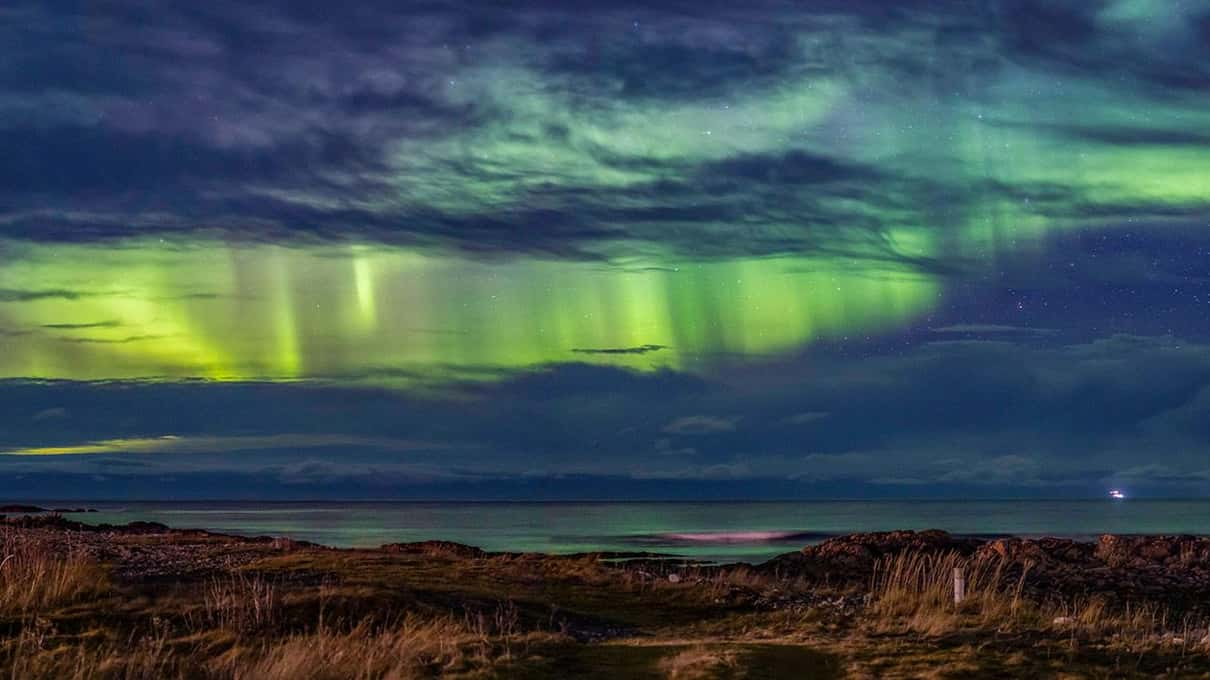
Polar night and deep winter
For a few weeks around midwinter, roughly early December to early January, the sun stays below the horizon in Svolvær. This is the polar night, with a soft twilight around midday rather than full darkness.
The long nights give the most hours for an aurora to appear. Snow on the peaks adds a bright foreground, and the coast often hovers around freezing, mild for the latitude because of the sea.
Deep winter also brings more storms. A run of windy, snowy days can cancel tours several nights in a row, and icy roads slow a van chase down.
Late winter and spring
February and March combine long nights with more daylight for sightseeing. Snow usually still covers the mountains, and the days are long enough to explore Henningsvær or Kabelvåg before an evening tour.
By April the nights shorten fast. The season tails off around mid-April, so a trip late in the month risks too little darkness for a proper chance.
Spring evenings can still bite in the wind or away from the sea. Pack as you would for winter, since standing still for hours feels colder than the thermometer suggests.
Weather counts for more than the month
Lofoten's weather is mild for its latitude but changeable and often cloudy. Clear spells come and go within hours, and that matters more for your chances than which month you pick.
That is why the road tours chase gaps in the clouds rather than sticking to one spot. Our guide to cloudy nights explains what happens when the forecast looks poor. The cruise or van comparison covers why a boat struggles here.
Solar activity is the other factor, and nobody can predict it far ahead. A strong geomagnetic storm can light the whole sky, while a quiet night may show only a faint band.
A photographer guide and 280+ reviews
Lofoten Insight's four-hour Ultimate Aurora Hunt comes with hot drinks and souvenir photos sent within 48 hours. The guide also explains the science and old stories behind the lights. Not for children under 12.
The moon and your dates
A full moon lights the snowy landscape, which helps photos of mountains and villages. It also washes out faint aurora, so a strong display still shows while a weak one may vanish.
If you can choose, the nights around the new moon give darker skies. It is a small advantage next to the weather, so do not move a whole trip over it.
Moonlight also changes how photos look, lighting the foreground so peaks and beaches show detail. Our photo guide covers camera settings for both bright and dark nights.
Matching the season to your trip
If you want open water and reflections, aim for autumn. If you want snowy peaks and the longest darkness, aim for December to February, and accept that storms will cost you some nights.
If you also want daylight for hiking or driving the E10 to the villages, late winter balances both. The days grow fast through March, while the evenings stay dark enough for tours.
Whatever the month, small vans fill first in the busy weeks. The group size guide helps you choose once your dates are set, and it lists which tours take the fewest guests.
Planning your nights
Book your tour early in your stay. If clouds or snow cancel the first night, there is still time for a second attempt, and free cancellation up to 24 hours before lets you move as the forecast changes.
Lofoten Insight's tour from ~$194 is the most reviewed in town, with a weather call a few hours before departure and a full refund if it is cancelled. The start time shows when you pick a date.
Leave the last night of your stay free if you can. A tour cancelled late in a trip has nowhere to move to, while one booked early can shift to a later date.
Three or four nights in Svolvær give a fair spread of chances. Our price guide covers the budget for a second tour, and what to wear deals with the cold in each part of the season.